
1. The NDPS Statutory Framework in India
The Narcotic Drugs and Psychotropic Substances Act, 1985 (NDPS Act) is among the most stringent penal enactments in the Indian legal system. Because the statute prescribes severe minimum sentences and reverses standard evidentiary burdens through statutory presumptions of culpable mental state (Sections 35 and 54), the Supreme Court of India has consistently ruled that the statutory safeguards provided to the accused must be complied with with absolute strictness.
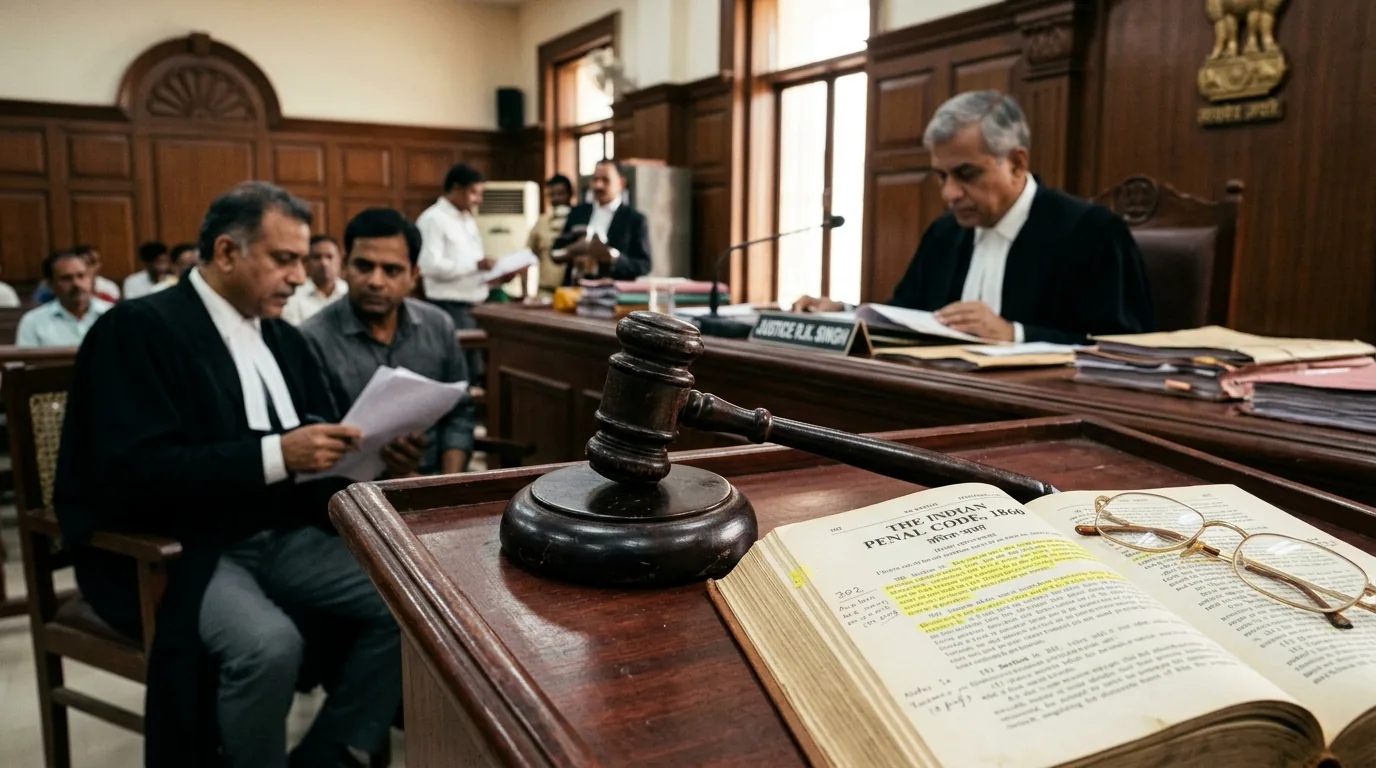
In Rajasthan, particularly across border and transit districts such as Hanumangarh and the appellate jurisdiction of Jodhpur, NDPS prosecutions require forensic trial audits, questioning recovery protocols, chain of custody, and sampling legality.
Strict Procedural Standard
In Noor Aga v. State of Punjab (2008), the Supreme Court laid down that the harsher the punishment prescribed by a statute, the greater must be the strictness of procedural compliance required from the prosecution before a conviction can be sustained.
2. Classification of Quantities & Statutory Penalties
The severity of penal consequences and bail maintainability under the NDPS Act depends strictly upon the contraband weight recovered:
- Small Quantity: Punishable with rigorous imprisonment up to 1 year, fine up to ₹10,000, or both. Bailable under general principles of BNSS.
- Intermediate Quantity: Punishable with rigorous imprisonment up to 10 years and fine up to ₹1,00,000. Section 37 bail restrictions do not apply; bail is evaluated under ordinary judicial discretion.
- Commercial Quantity: Mandates minimum rigorous imprisonment of 10 years (extending to 20 years) and minimum fine of ₹1,00,000 (extending to ₹2,00,000). Section 37 twin conditions apply with full rigour.
3. Section 37: The Twin Conditions for Bail
Section 37 of the NDPS Act creates a statutory bar against the grant of bail in offences involving commercial quantity. Before granting bail, the court must record satisfaction of two cumulative conditions:
- The Public Prosecutor must be afforded an opportunity to oppose the bail application; and
- Where the Public Prosecutor opposes, the court must be satisfied that there exist reasonable grounds for believing that the accused is not guilty of such offence and that they are not likely to commit any offence while on bail.
In Mohd. Muslim v. State (NCT of Delhi) (2023), the Supreme Court held that Section 37 cannot be interpreted to permit indefinite pre-trial incarceration. Prolonged custody combined with unlikely completion of trial violates Article 21 and justifies the grant of regular bail notwithstanding Section 37.
4. Mandatory Search & Seizure Safeguards
Trial defence under NDPS centers primarily upon proving statutory violations during search and recovery:
- Section 42 Compliance: If search is conducted based on prior secret information in an enclosed place, the officer must reduce the information into writing and transmit a copy to their official superior within 72 hours. Failure to comply vitiates the search (Karnail Singh v. State of Haryana, 2009).
- Section 50 Compliance (Personal Search): When searching the person of an individual, the officer is mandatorily obligated to inform them of their statutory right to be searched before a Gazetted Officer or a Magistrate. Searching the suspect without offering this option is fatal to the prosecution (Vijaysinh Chandubha Jadeja v. State of Gujarat, 2011).
- Section 57 Reporting: The arresting officer must make a full report of arrest and seizure to their immediate official superior within 48 hours.
5. Section 52A Inventory Certification & Sampling
Under Section 52A of the NDPS Act and the landmark Supreme Court decision in Union of India v. Mohanlal (2016), police officers possess no authority to draw contraband samples at the recovery spot. All seized substances must be brought immediately before the Executive or Judicial Magistrate, who must:
- Certify the correctness of the inventory;
- Supervise the drawing of representative samples in the presence of the Magistrate; and
- Certify photographs of the seized packages.
Failure to draw samples in the presence of a Magistrate under Section 52A renders the FSL report inadmissible and entitles the accused to regular bail or acquittal (Mangilal v. State of M.P., 2023).
6. Inadmissibility of Section 67 Statements
In Tofan Singh v. State of Tamil Nadu (2021), a landmark 3-judge bench of the Supreme Court held that officers empowered under the NDPS Act (such as NCB, police, or excise officials) are "police officers" within the meaning of Section 25 of the Evidence Act (now Section 23 of BSA). Consequently, confessions recorded under Section 67 of the NDPS Act are completely inadmissible and cannot form the basis of conviction or denial of bail.
7. Chambers Trial Strategy in Rajasthan
Advocate Rajesh Chhabra (Hanumangarh) and Advocate Aman Chhabra (High Court Jodhpur) employ a coordinated trial strategy in NDPS litigation:
- Malkhana Register Audit: Scrutiny of entry and exit dates in the police station warehouse (malkhana) to establish tampering or broken seals prior to laboratory delivery.
- Independent Panch Witness Examination: Cross-examination of stock police witnesses and verifying discrepancies in recovery memos.
- Call Detail Records (CDR) & Location Audit: Demonstrating through mobile tower records that the accused was picked up from a location entirely different from the alleged recovery spot.
Frequently Asked Questions
Yes, bail can be granted if defence counsel establishes non-compliance with mandatory provisions (§42, §50, or §52A), demonstrates absence of conscious possession, or shows prolonged incarceration violating Article 21 (Mohd. Muslim doctrine).
Physical presence of contraband in a vehicle or premises is insufficient for conviction. The prosecution must prove that the accused had knowledge and deliberate control over the illicit substance, rather than being an innocent passenger or tenant.
According to Supreme Court precedent, Section 50 strictly applies to personal bodily searches. However, if personal search is conducted simultaneously with a search of luggage, failure to comply with Section 50 invalidates the entire recovery process.
While the law permits conviction based on credible police testimony, where independent panch witnesses turn hostile or were deliberately not joined during search in broad daylight in a populated area, serious doubt is cast upon the prosecution story.


Statutory Disclaimer: Information on this page is for educational and procedural guidance regarding NDPS trial procedure. Results in NDPS litigation depend upon strict evidentiary facts and forensic examination.